

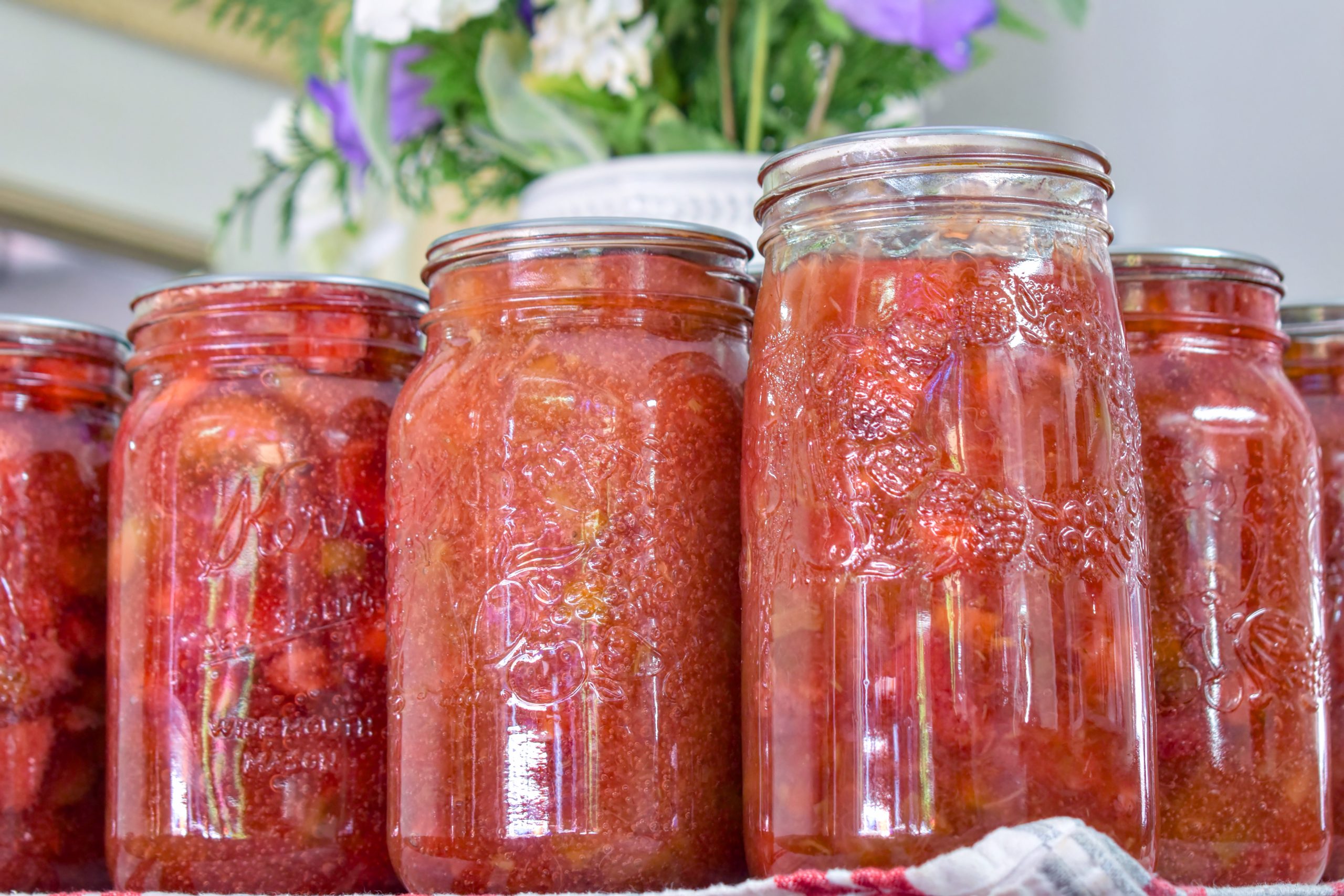
 Rhubarb is one of those fruits—nay, vegetables—that pops up reliably each spring and often produces in abundance. But despite its prolific nature, it can leave you scratching your head wondering what to actually do with it.
As someone who was lucky enough to inherit a massive rhubarb patch when we moved onto our current property, I’ve tried all sorts of rhubarb recipes over the years. Two of my favourite ways to preserve it are this tart and aromatic “Rhubarbecue” sauce and this simple rhubarb juice concentrate, which I use to flavour homemade sodas, cocktails, and water kefir.
But rhubarb is arguably at its best when paired with strawberries, and the most obvious way to enjoy that combination is in a strawberry rhubarb pie.
That said, I don’t always have the time (or the desire) to make a pie from scratch during the brief window when both strawberries and rhubarb are in season. Instead, I prefer to make the filling while both are abundant and preserve it for later.
Not only does this ensure that my early-season rhubarb harvest doesn’t go to waste, but harvesting rhubarb early also encourages the plant to produce another crop later in the season. And having jars of strawberry rhubarb pie filling on the pantry shelf makes it easy to throw together a quick pie (or an even quicker crumble) whenever the mood strikes.
As an added bonus, I find home-canned strawberry rhubarb pie filling tends to be thicker and less runny than freshly-made pie filling. That’s largely because it’s thickened with Clear Jel rather than flour or cornstarch, resulting in a filling that sets beautifully and holds together well once baked. It also holds its colour really well, and—in my experience, anyway—is just as bright and red coming out of the jar a year later as it was going in.
What Is Clear Jel (and Why Do You Need It for Canning Pie Fillings)?
If you’ve never canned pie filling before, you might be wondering what Clear Jel is—and why this recipe calls for it instead of flour, cornstarch, or tapioca.
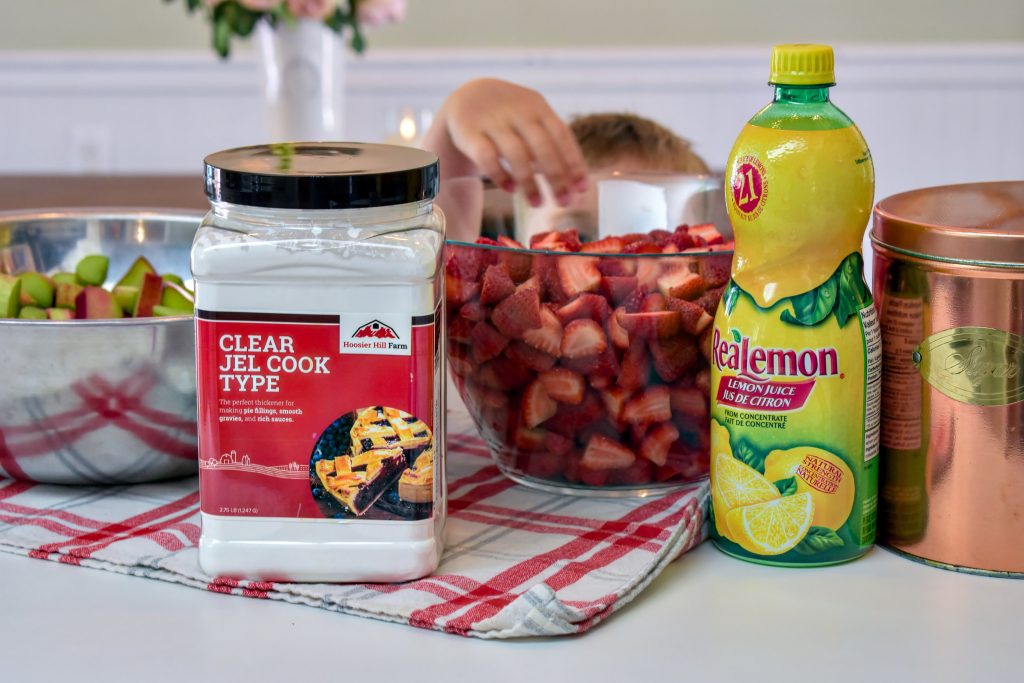
Clear Jel is a modified corn starch that was developed specifically for home food preservation. Unlike other thickeners, it remains stable during the canning process and throughout long-term storage, creating a smooth, glossy filling that doesn’t separate or become cloudy over time.
More importantly, Clear Jel allows heat to penetrate the jar properly during processing. Other thickening agents, including flour, cornstarch, and tapioca, can interfere with heat transfer and may prevent the contents of the jar from reaching a safe temperature during canning. For that reason, Clear Jel is the only thickener recommended for home-canned pie fillings.
When shopping for Clear Jel, make sure you purchase cook-type Clear Jel, not Instant Clear Jel. While the two products may seem similar, they are not interchangeable. Cook-type Clear Jel is designed to be heated during cooking and canning, while Instant Clear Jel is intended for recipes that don’t require cooking.
The good news is that a little goes a long way. Once you’ve purchased some for this strawberry rhubarb pie filling recipe, you’ll have plenty left over for other canned pie fillings and fruit preserves.
Other Ingredients and Equipment Needed
To make this strawberry rhubarb pie filling recipe, you’ll need:
- 12 cups sliced fresh rhubarb
- 12 cups strawberries (approx. 7 to 8 pounds)
- Bottled lemon juice
- Clear Jel (cook type)
- Sugar (refined or unrefined white sugar)
- Quart-sized Mason jars (or pint jars)
- Water bath canner (if canning quart jars, ensure the canner is tall enough to accommodate the height of the quart jars plus an extra two inches of water without boiling over—I use an old pressure canner with the lid placed on top but not secured since my water bath canner is too short.
- Large pot (for making the pie filling)
- New canning lids and screw bands
- Jar lifter
- Canning ladle
- Canning funnel
- Plastic canning knife for removing air bubbles (or use a stainless steel butter knife)
How to Can Strawberry Rhubarb Pie Filling
Step 1: Macerate the Rhubarb
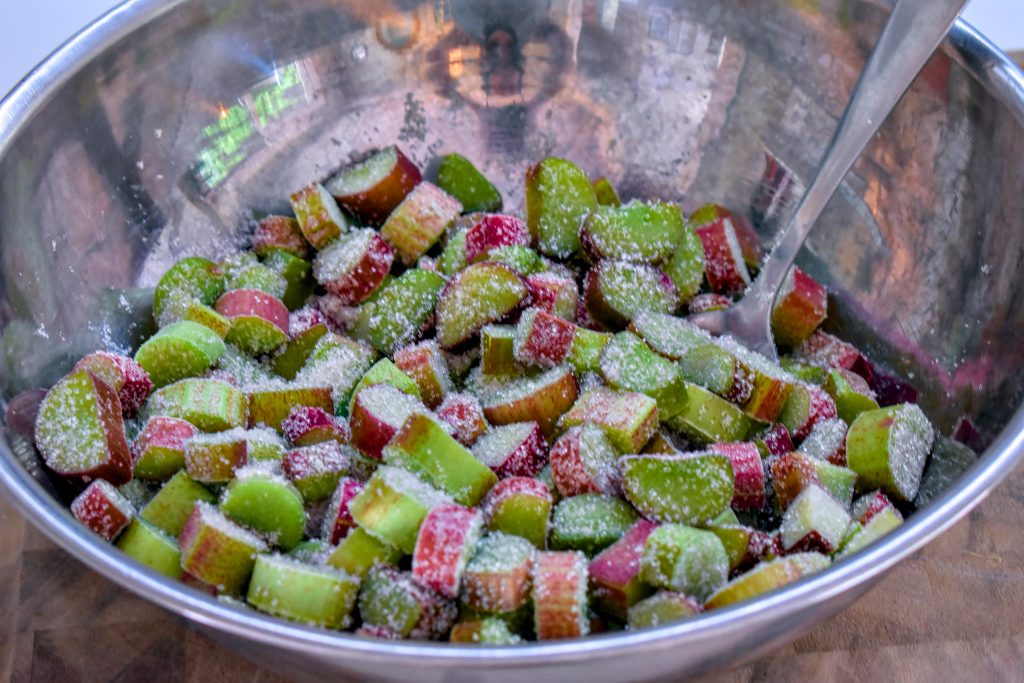
Combine the sliced rhubarb and sugar in a large bowl or stock pot and allow it to sit for at least an hour (or overnight in the refrigerator).
As the rhubarb sits, the sugar will draw out its juices and begin dissolving, creating a syrup that forms the base of the pie filling. This extra step helps prevent the rhubarb from releasing too much liquid later, resulting in a thicker, more consistent filling.
Step 2: Prepare the Strawberries and Canning Equipment
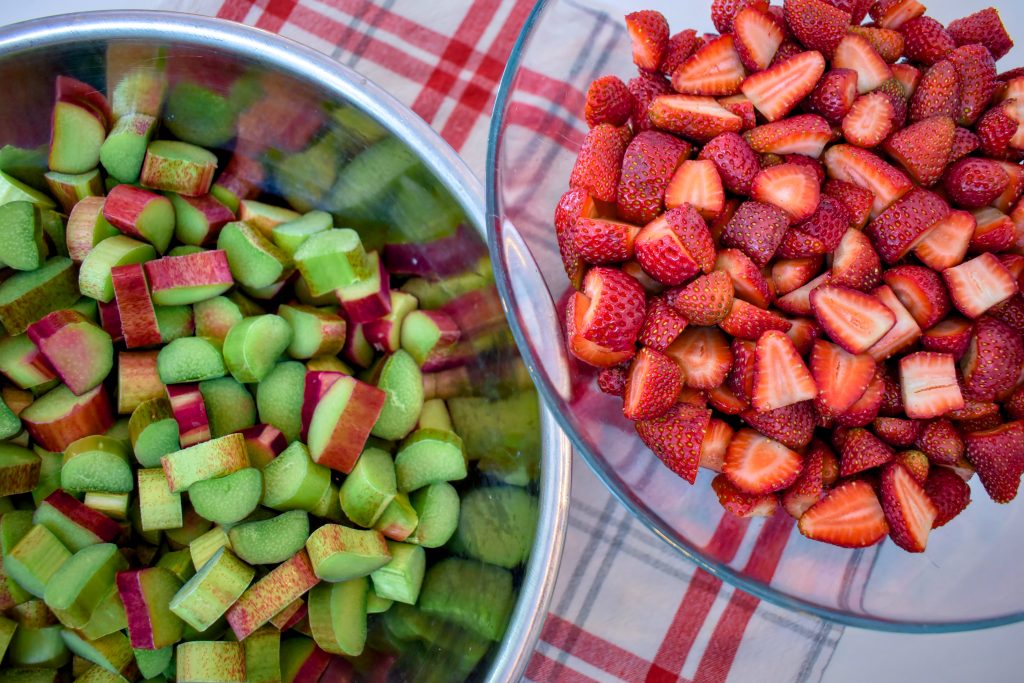
While the rhubarb is macerating, wash and hull the strawberries and cut any larger berries into halves or quarters. You want the strawberries to be roughly the same size as the sliced rhubarb (around 1 inch pieces).
At the same time, prepare your water bath canner, jars, lids, and canning tools. For more information on canning, check out my Beginner’s Guide to Water Bath Canning.
Step 3: Prepare the Clear Jel Mixture
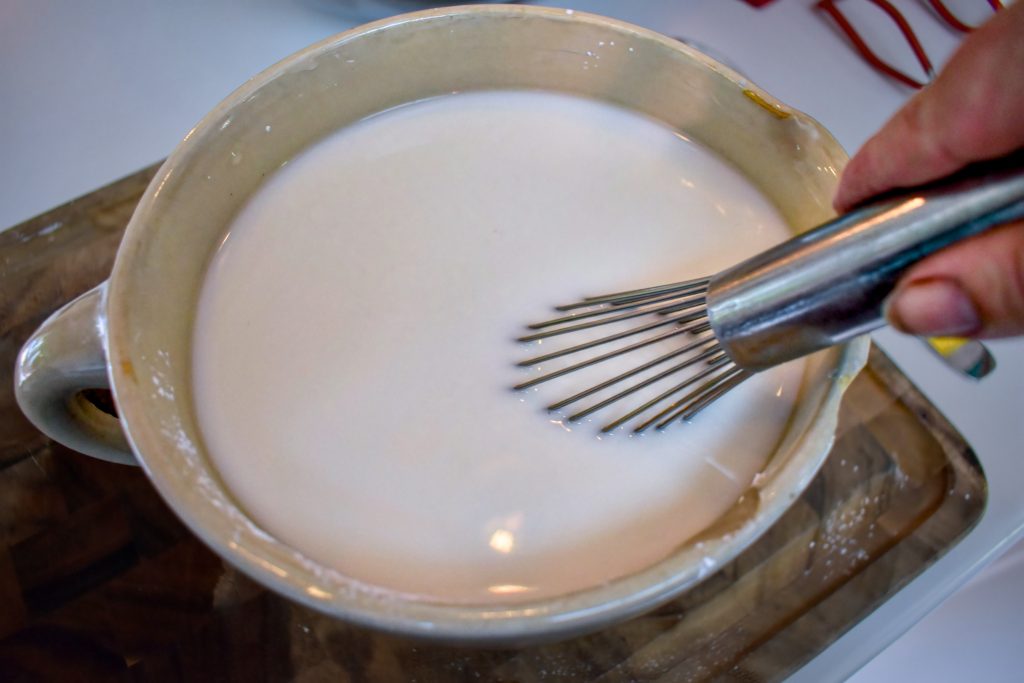
In a separate mixing bowl or large measuring cup, whisk the Clear Jel into the cold water until completely dissolved.
Starting with cold water helps prevent lumps from forming and ensures the filling thickens evenly once heated.
Step 4: Cook the Filling
Transfer the macerated rhubarb and all of its juices to a large stock pot and bring the mixture to a simmer over medium-high heat.
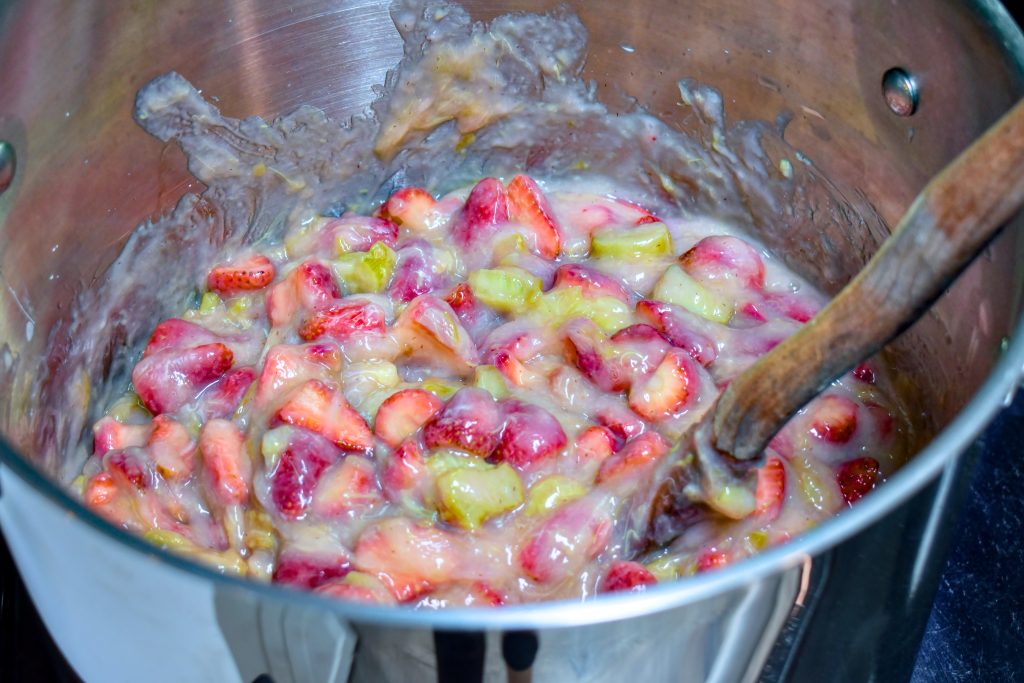
Once simmering, slowly add the dissolved Clear Jel mixture, stirring constantly. Continue cooking until the filling begins to thicken and bubble.
Fold in the strawberries and continue stirring gently until they are evenly distributed throughout the filling. Add the bottled lemon juice and bring everything back to a boil for one minute.
Step 5: Fill the Jars
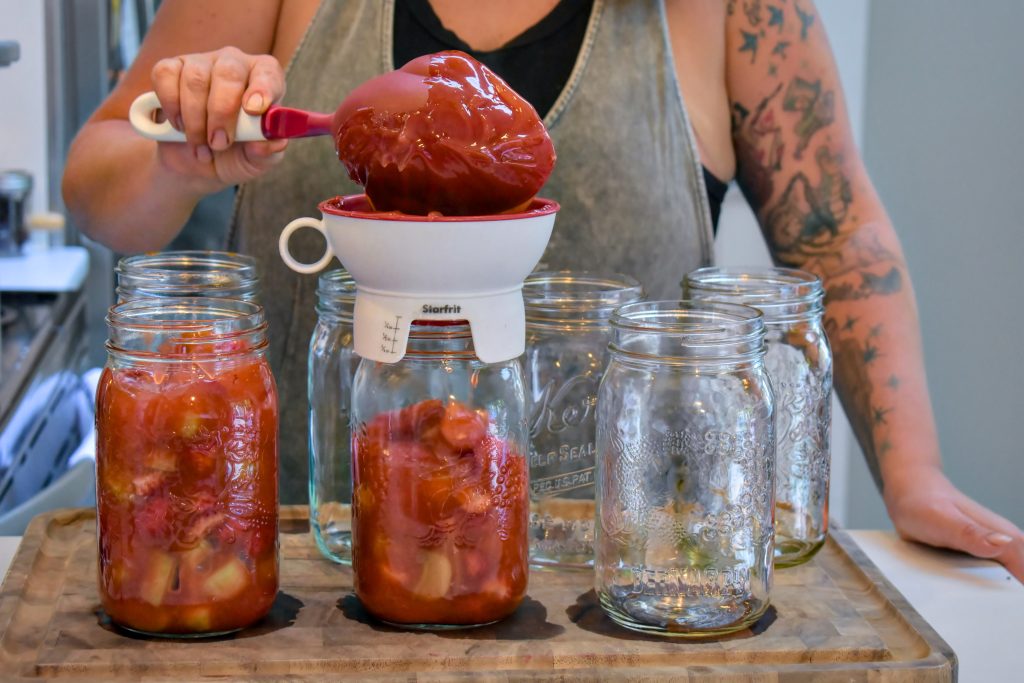
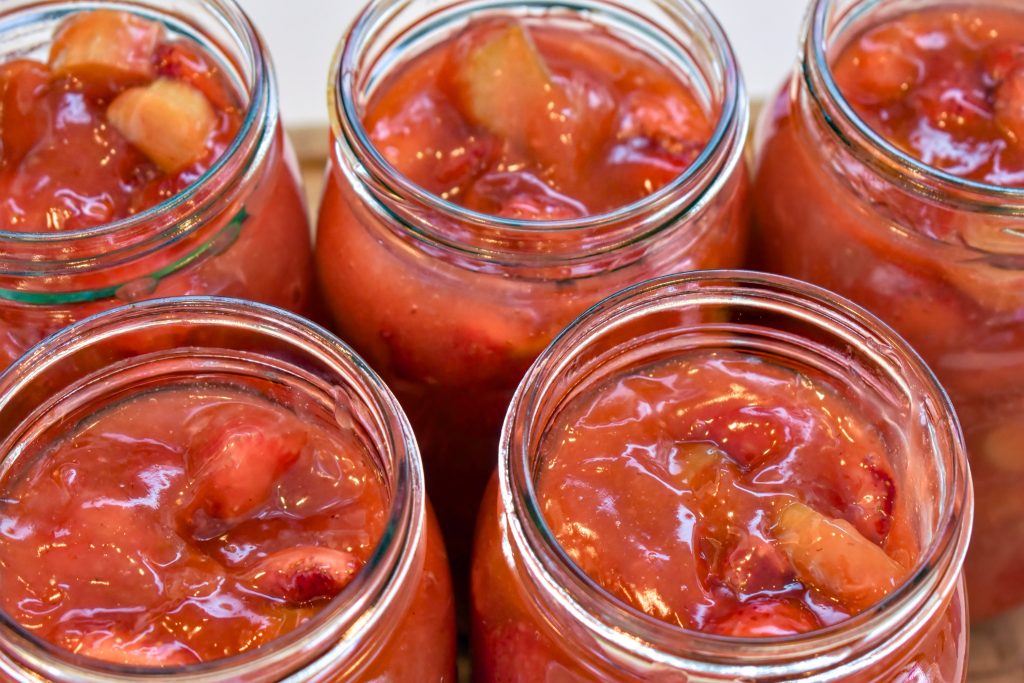
Using a canning funnel and ladle, fill hot jars with the pie filling, leaving 1 inch of headspace.
Run a plastic canning knife or stainless steel butter knife around the inside of each jar to remove any trapped air bubbles, then adjust the headspace if necessary.
Wipe the rims clean, then place the lids and bands on, and tighten to fingertip tight.
A note on siphoning
With pie filling, it’s extra important to fill the jars only to the recommended headspace and remove as much air as possible because of how thick the filling is. Large air bubbles can easily get trapped and can cause jars to boil over in the canner and cause the filling to siphon out of the jar. This can cause a bit of a sticky mess, which you can at least clean up. But the bigger danger with siphoning is that it may get on the rim of the jar and prevent a good seal, which can cause the contents to spoil.
You’ll never get all the air bubbles out of canned pie filling; it’s quite normal to see lots of small air bubbles in your finished product. Likewise, some siphoning here and there is normal and I’ve successfully canned many jars of pie filling that had some siphoning and they still sealed and were perfectly fine. But do the best you can to remove air bubbles and be sure to allow a generous 1 inch headspace at the top of jars to prevent any potential issues.
Step 6: Process in a Boiling Water Canner
Place the filled jars into the canner and ensure they are covered by at least 2 inches of water. I don’t have a water bath canner tall enough to accommodate quart-sized jars (which is what I like to use), so I use an old pressure canner with the lids just placed on top (rather than locked down). A large, standard heavy-bottomed stockpot with a canning rack in the bottom will work as well.
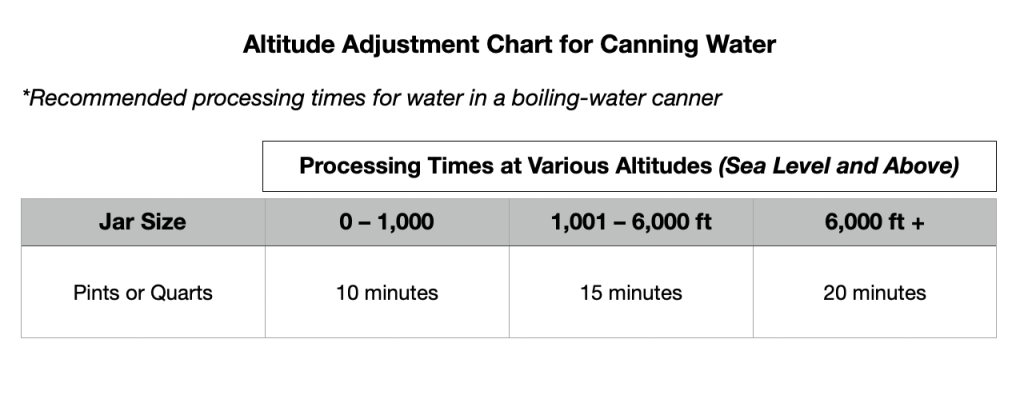
Bring the water to a full rolling boil, then process the jars for 30 minutes, adjusting for altitude if necessary.
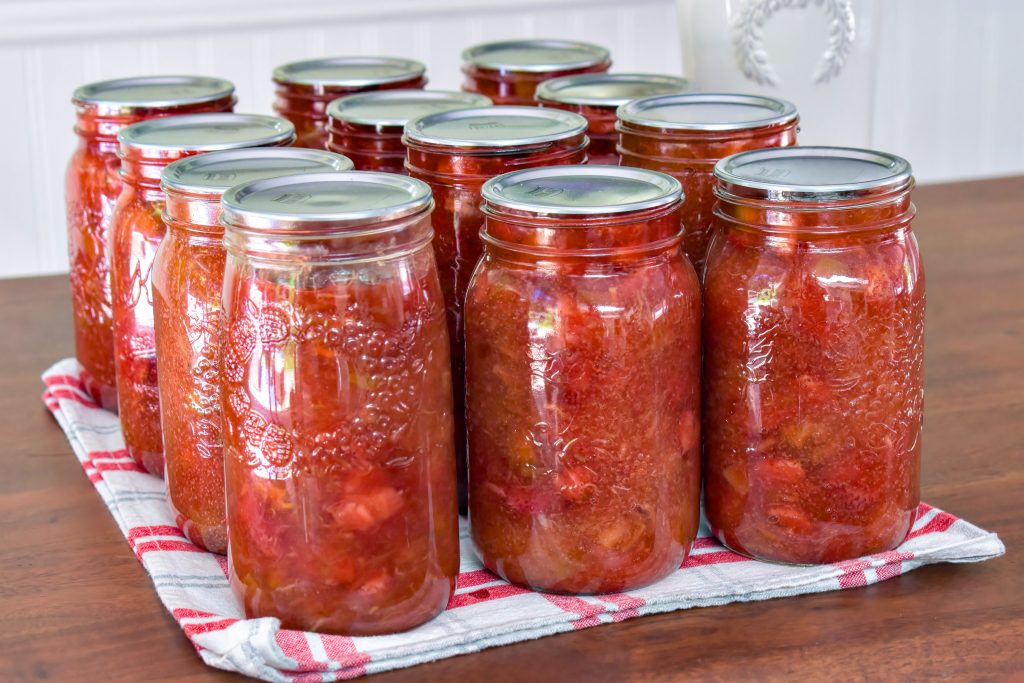
Once the processing time is complete, carefully remove the jars and place them on a dish towel on the counter.
Step 7: Cool and Store
Allow the jars to cool undisturbed for 12 to 24 hours.
After the jars have cooled completely, remove the bands, check the seals, and wipe down the outside of the jars if needed.
Store sealed jars in a cool, dark place for up to one year for best quality. Canned foods can typically be stored for much longer than that, but the colour, texture, and overall quality may start to degrade over time.
How to Use Strawberry Rhubarb Pie Filling
Of course, the most obvious use for this filling is a classic strawberry rhubarb pie [link], but that’s far from the only option.
One quart jar contains just about the right amount of filling for a standard 9-inch pie shell. Simply pour the filling into your prepared pie crust, add a top crust or crumble topping, and bake until the filling is bubbling and the crust is golden brown.
(Get my recipe for Perfect, Flaky Pie Crust here.)
Beyond homemade pies, this filling also works well in:
- Fruit crisps and crumbles
- Turnovers and hand pies
- Mixed with yogurt
- As a cheesecake topping
- As a topping for ice cream
Because the filling is already cooked and thickened, it comes together much faster than making a strawberry rhubarb pie completely from scratch.
Frequently Asked Questions
Can I Use Pint Jars Instead of Quart Jars?
Absolutely. While I typically use quart jars because I most often use this filling for pies, pint jars are a great option if you have a smaller household or want more flexibility.
Pint jars work particularly well for crumbles, cheesecake toppings, or serving over ice cream. Just be sure to leave the recommended 1-inch headspace, and follow all of the same directions as canning quart jars.
Can I Reduce the Sugar?
I don’t recommend reducing the sugar in this recipe.
While the amount of sugar you use doesn’t affect the safety of the finished product, it does help balance the tart rhubarb and contributes to the texture of the finished pie filling. This recipe was developed and tested using the proportions listed above.
Why Does the Recipe Call for Bottled Lemon Juice?
Bottled lemon juice has a standardized acidity level, making it a safer choice for canning than fresh lemons, which can vary in acidity.
When it comes to canning safety, it’s best to follow the recipe exactly as written.
Can I Use Frozen Strawberries?
Yes. Frozen strawberries can be substituted for fresh strawberries if needed, although I prefer to use fresh as I find they maintain their shape and texture better.
If using frozen strawberries, thaw them completely first and drain off any excess strawberry juice before measuring. This will help maintain the proper consistency of the finished filling.
Can I Use Cornstarch Instead of Clear Jel?
No. Clear Jel is the only thickening agent recommended for canning pie fillings. Cornstarch, flour, and tapioca starch work well in freshly baked pies, but they are not recommended for home-canned pie fillings because they can interfere with heat penetration during processing and cause pie filling to clump and lead to poor texture quality.
How Long Does Home-Canned Strawberry Rhubarb Pie Filling Last?
For best quality, use within one year.
Store sealed jars in a cool, dark place and inspect them before use. While properly canned foods often remain safe much longer, the colour, flavour, and texture will gradually decline over time.
Strawberry Rhubarb Pie Filling (Canning Recipe)
This delicious and easy strawberry rhubarb pie filling you can be preserved by water-bath canning so you can enjoy the flavors of summer all year long!
Ingredients
- 12 cups sliced rhubarb (trimmed, leaves discarded, and sliced 1-inch thick)
- 6 cups sugar
- 12 cups halved hulled strawberries
- 1 1/2 cups Clear Jel
- 7 cups cold water
- 1 cup bottled lemon juice
Instructions
- Wash and trim the rhubarb stalks, then slice into approximately 1-inch pieces.
- Mix the rhubarb with the sugar and allow it to macerate for at least an hour (or overnight) to release its juices.
- Wash and hull the strawberries. Cut large berries in half (or into quarters if very large). Set aside.
- Prepare your canner, jars, and lids. Keep jars hot until ready to fill.
- Mix the Clear Jel with the measured cold water and whisk until the Clear Jel is completely dissolved. Set aside.
- Add the macerated rhubarb to a large stock pot and bring to a simmer over medium-high heat.
- Add the water and dissolved Clear Jel and continue to cook until the mixture thickens and begins to bubble.
- Once the mixture has started bubbling, fold in the strawberries and mix gently until well combined. Then add the bottled lemon juice and return to a boil for 1 minute, stirring constantly.
- Ladle the hot pie filling into jars, leaving 1 inch of headspace. Remove air bubbles with a stainless steel or plastic canning knife and adjust headspace if necessary.
- Wipe jar rims, apply lids and bands, and tighten to fingertip tight.
- Process jars in a boiling water bath canner for 30 minutes, adjusting for altitude as needed.
- Remove jars and allow to cool undisturbed on the counter for 12 to 24 hours. Check seals, remove bands, and wipe the outside of jars to remove any sticky pie filling that may have boiled over before storing.

Wanna learn how to can your own food?
Whether you’ve never canned anything before or you’ve done a little home canning and you’re ready to take the next step, my Yes, You CAN! complete home canning course will walk you through everything you need to know to get started canning food SAFELY at home.
Over the course of 12 easy-to-follow lessons, we cover both water bath canning and pressure canning, and I show you step-by-step how to can your own jams, jellies, pickles, pie fillings, fruits, vegetables, tomato sauce and chicken stock at home. And of course we’ll go over safe canning practices, equipment and over all best practices in more depth so that you always feel confident both during the canning process and while enjoying your home-canned food afterwards.
You’ll also get a collection of bonuses including:
- Printable checklists and cheatsheets to help you stay safe and never miss a step while canning food at home
- My bonus Jam and Jelly Making Mini-Course to help you make and can your own jams and jellies with store-bought pectin, no pectin and even low-sugar
- A copy of my Home Canning Handbook, complete with 30 of my favourite home canning recipes for canning everything from fruits and vegetables to jams and jellies to sauces and salsa to stocks, soups, meats, combination meals and more!
If you’re ready to get started home canning (or canning more food than ever before this year!) enroll now and get started stocking your pantry!



Can I use frozen rhubarb? If so, will I need to modify the recipe due to extra moisture that frozen rhubarb seems to produce once it’s been frozen?
Hi Kimberly, I double-checked with Anna and confirmed that yes, you can use frozen rhubarb, but it might get a bit soft due to the freezing and thawing process, and it won’t be quite as chunky in the pie filling. Definitely thaw it first, and mix the sugar with the rhubarb once it’s thawed. It doesn’t need to macerate (sit in the sugar for any length of time) because the thawing process will draw out moisture from the rhubarb, so the sugar can just be added for flavour instead of being used to draw out liquid. -Ashley (Assistant)