


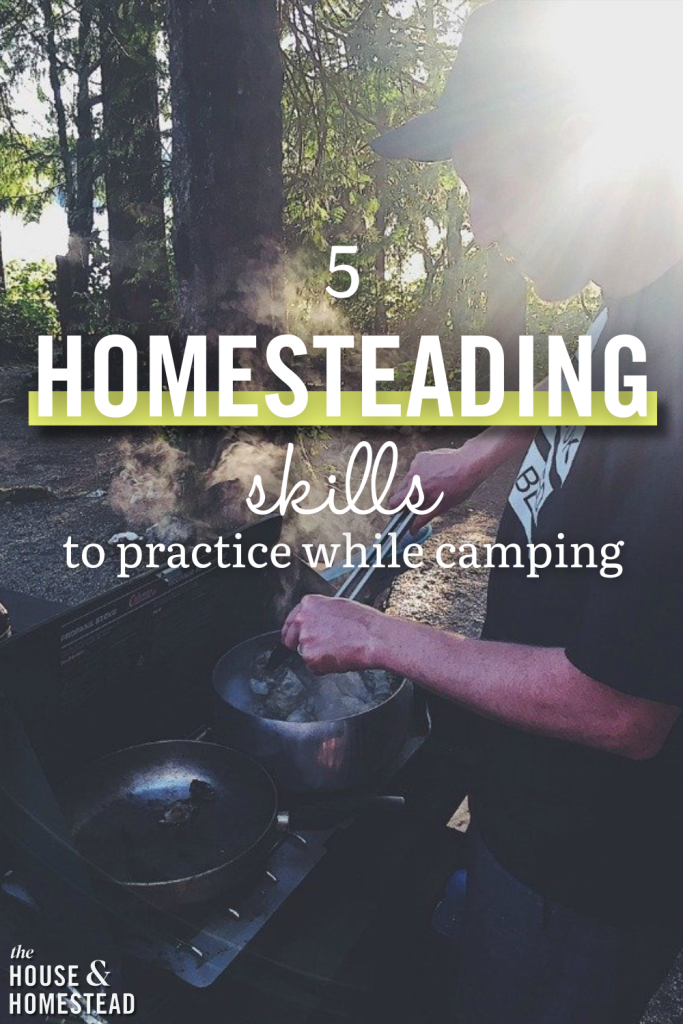
 We took our daughter on her first camping trip last weekend. She loved it. All the fresh air, staying up late in front of the campfire, eating al fresco and trying her first roasted marshmallow put a permanent smile on her face (well, at least when she wasn’t crying because she had to go to bed).
I loved camping as a kid. I still do! It’s a chance to go somewhere remote, power down and reconnect with nature. The only problem is, as a homesteader, it can be difficult to abandon the big to-do list to get away for a few days.
Homesteading is busiest during the warm-weather months, which just so happens to be the time of year when camping is best too. We have gardens to tend and, in many cases, livestock to care for.
Personally, we are just at the tail-end (hopefully) of dealing with a bad pest problem that took out many of our seeds and seedlings this year. We had to resow, and we finally just got our transplants in the ground. We still had a bunch of tiny seedlings just starting out in the greenhouse too, and alongside them were seeds still taking their time to germinate.
Seedlings, like babies, need a ton of care and attention, so I was hesitant to go away and risk losing our entire crop. Luckily we also have amazing family and friends who help out when we’re away, so we had people step up to do the watering and take care of our animals. But it’s still difficult to take “time off” from all the things that need being done as we get into growing season and gear up for summer.
As I stressed about leaving our chores behind for the peace of the great outdoors, I eased my mind by reminding myself that camping really is (or should be) a vital pastime of any homesteader. Not only do we need a break too, camping also offers a chance to learn and refine an array of important homesteading skills that we don’t always actually get to practice at home.
Going out into the wilderness for days at a time forces us to rely on ourselves, our skills and whatever provisions we have with us. There’s typically no “running to the store” if you forget or run out of something. There’s no flipping a light switch when it gets dark. And there’s no takeout to fall back on if you’re not into cooking that night.
As I thought about the valuable skills we would get to practice while camping, I felt less guilty about leaving “work” behind for a long weekend in the remote wilderness that we are lucky to have access to just a few hours from home. I also thought about the amazing experience we were giving our little girl.
It is very important to me that she be exposed to lots of time outdoors and in nature from a young age, because the first step in learning to respect the environment is learning to love and appreciate it. Even if all my seedlings died, I reminded myself that it would be worth it just to have Evelyn experience her first camping trip.

Evelyn and dad, about to try her first roasted marshmallow.
It was definitely worth it in the end. It was relaxing and refreshing and we came home with our clothes smelling like campfire (mmmm… Is it weird that I LOVE that smell?). And equally as important, we got a chance to put some of our skills to the test. Here are just a few of those skills we got just a little bit better at on our most recent camping trip…
1. Prepping
There’s nothing like going on a 5-day camping trip to throw you into “prepper” mode. You need to think about how much food you’ll need, what tools will be essential for (comfortable) survival, how you will obtain and store fresh drinking water, what you will use for shelter…
Camping is sort of the ultimate prepping experience without there actually being a disaster. Once you get out to your location, you probably won’t be making any runs back to town.
We were at least an hour or more from the closest town, so we planned to have everything we would need for 5 days. We brought enough food to last up to 10 days, because it’s always better to have more food than you need in a potential survival situation. And we brought all of the important tools, cookware and gear we needed to make ourselves a temporary home in the woods. We forgot some stuff too, but over all we survived comfortably during our time there.
The process of prepping for this trip did really open my eyes to how underprepared we are for an emergency though. Just shopping for food and supplies alone took up more than a full day. And packing everything up took a few solid hours as well. It made me think about how we would handle a situation where we had only minutes to evacuate our house. I have a couple bug-out bags and supplies ready just in case that happens, but if it took all this just to prepare for a camping trip, we are drastically underprepared for an emergency.
The great thing is, camping highlighted our shortcomings in this department, so we can make improvements before we find ourselves faced with a disaster situation.
2. Chopping wood & building fire
If you ever plan to live off-grid, you will likely be chopping a TON of firewood in your life. Even if off-grid living isn’t for you, you just never know when the power will go out and you’ll need to build a fire to keep warm or cook your food.
Chopping wood and building a fire is something every homesteader should know how to do. As an added bonus, you might even want to learn to start a fire without a lighter or matches. My husband Ryan brought a flint with him this time and was able to start a fire with it, so it is something we will be keeping in our emergency/bug-out bags from now on.
I have to admit, Ryan is the fire guy. I don’t usually chop the wood or build the fire because he enjoys doing it. There’s something primal about it, so I let him have it;) But next time we go camping I definitely want to practice my wood-chopping skills. I know I can chop wood and I’m a pretty decent fire-builder, but I do get a bit lazy and let him do most of that work. I want to start taking on more of that responsibility and get a little more confident with these skills. If something were to happen to him (God forbid), it’s important that I be able to take care of our family without him. This is just one, small way to ensure I can do that just a little bit better.
3. Hunting/Fishing/Foraging
I used to hate hunting. Like, HATE it. As an animal lover and protector of the environment, I still do loathe trophy hunters and poachers, but over the years I’ve gained great respect for anyone who hunts, kills and processes their own meat. I have come to believe that if we are going to eat meat, we should at least be able to kill it and try doing so at least once in our lives.

I would like to try hunting at some point, but I’m still a ways off from having the training and equipment necessary to just go off into the bush and take an animal. However we did get our fishing licences and a couple rods before this trip, and we had the opportunity to cast off in some of the richest fish-bearing waters anywhere in the world!
We camped on the northwest coast of Vancouver Island, where there are all kinds of salmon, cod, halibut, sole and dungeness crab for the taking. Unfortunately, we don’t have a boat and didn’t catch anything from the dock. We also didn’t know that we would NEED a crab trap for the dungeness crabs, so that will definitely be an investment worth making next time. We did, however, scoop up a ton of fresh oysters off the beach, and in the end we enjoyed two consecutive nights of oyster dinners!
As we live in an area renowned for its world-class oysters, and there were an abundance of big juicy ones on the beach when the tide went out, just begging to get in our bellies. We steamed them and then pan-fried them as there is always a warning about eating potentially-contaminated raw oysters. Not only were they super yummy (on their own and in our rendition of Oyster Po’boys on hotdog buns), but the feeling of satisfaction you get from providing your own food right from the source is indescribable.
If we had to, I know how to forage for a few other things in our local environment. We could have eaten some seaweed or some edible greens from the forest, or some berries in summer. We didn’t this time around, but I believe it’s important to be able to identify at least a handful of edible plants that grow wild in your area. You just never know when they might become a valuable, or even vital food source.
4. Living & Cooking Off Grid
Now, if you’re living out of a massive RV complete with television, microwave and hot shower, you are not doing camping right! Sorry if I upset anyone with that statement, but while that makes for a nice vacation and is worthhile if you’re going to camp somewhere for extended periods of time, you at least need to power it down and spend some time cooking and washing up outdoors and enjoying some off-grid entertainment.
We met another camper while we were away who had brought his RV up to set up camp for the entire summer. Since we were in the site he usually stays in, he asked if he could set up some of his things while we were there. He brought us some cinnamon buns as a grateful gesture, so of course we obliged!

We watched as he set up an off-grid chest freezer in the woods just behind our site (to store the fish he would catch) and showed us how he sets up his outdoor shower beside it. He had a big drum to store water and told us he heats it with a propane water heater. This was an excellent example of someone who still made an effort to live outdoors and off-grid even though he had a big RV with all the bells and whistles available to him.
As for us, we got to practice cooking outdoors, living without running water and entertaining ourselves without TV or technology. We cooked over the fire and on our propane stove. We collected water from the creek and boiled it to heat it up. And we entertained ourselves with fishing, exploring, cards and a solid game of beer pong, as well as simply enjoying uninterrupted face-to-face family time with each other and, especially, with out baby daughter. Putting our phones down and switching off for a few days not only teaches us valuable skills, it is also one of the healthiest things we can do for ourselves and our relationship with others.
5. Making Do or Doing Without
“Make do or do without” are words many homesteaders live by. Being resourceful, using the materials you have on hand and not being wasteful are founding philosophies of the homestead movement. Naturally, getting a chance to really practice we preach only helps to make us better at what we do.
Like I said earlier, a camping trip somewhere remote forces you to prepare all of the food and supplies you will need for your time away if you can’t pop out to the store for something you need. Likewise, once you have arrived at your destination, you need to make do with whatever you have with you. If you forgot something, oh well! Run out of something? C’est la vie! You’ll have to find a way to use something else in place of whatever you don’t have, make it out of materials you do have on hand, or simply do without altogether.
This is a great lesson to learn whether you’re a homesteader or not. We live in a wasteful, consumer society where we are used to getting whatever we want whenever we want it. Learning to make do or do without teaches us to reuse and repurpose items, find novel solutions to problems, waste less and and see value in places we only saw junk before. It helps us to appreciate what we do have and be grateful for it. And that’s a lesson we all need a refresher course on from time to time.
In the end, our camping trip was a success. We forgot a few things that might have made life a little easier, we didn’t catch any fish, and when we arrived home a few of our smaller, more fragile seedlings had withered and died. But the lessons we learned were invaluable. And the time spent together, unplugged and out of reception, off-grid and huddled together around the campfire, was time we don’t make for each other often enough.
So if, like me, you find yourself making excuses why you shouldn’t go camping, next time think of all the reasons you should. You might lose a few seedlings too, but what you gain while camping is priceless. So, what are you waiting for? Go play outside!




Hi Anna.
This is a wonderful read. I wanted to say thank you for the fabulous recipe for the castile soap to make washing liquid. I made it as my daughter has delicate skin, It smells lovely & made the clothes soft. x
That is wonderful, Mandi!
Thanks for the feedback and I am glad it works so well for your daughter! 🙂
how do i join
You had an amazing growing time! Now start planning for the next one! This Island has so much to show you!
I’ve not been camping for a few years now…think I need to put it on my summer to do list. I’m also going to take a harder look at a bug out bag. Thanks for sharing.
Thanks for reading!